
Category: Emotional Needs & Resources
Nothing to Fear Day: understanding fear and building resilience
Our CEO, Jon, writes a monthly thought piece for a local newspaper, here’s one on fear.
Did you know there’s an international Nothing to Fear Day? Neither did I… but it’s a great excuse to talk about the nature of fear, how it can help us, and when it becomes a barrier to good mental health.
The day originated from President Roosevelt’s famous words in May 1941: “We have nothing to fear but fear itself.” He meant that while fear is a natural and useful emotion that keeps us safe, sometimes it can stop us from facing challenges that aren’t truly dangerous.
What is fear and why do we experience it?
At Suffolk Mind, we often say that fear arises when something challenges our needs for security and control. It’s a signal, sometimes helpful, sometimes limiting.
We tell a story in schools: a solitary lion sees his reflection in water. Because he’s never seen another lion before, he runs away in fear. A butterfly lands on his shoulder and shows him it’s just his reflection. With this new information, he overcomes his fear and drinks.
This story illustrates that fear helps us learn, especially when paired with information and experience.
How fear can help us learn
When learning anything, we need a balance of fear and positive expectation. Take learning to ride a bike:
- Fear of falling keeps us cautious and attentive.
- Excitement about independence motivates us to keep trying.
This balance helps us develop resilience — we get back up after falling, learning to ride without stabilizers. Fear, in this context, is not the enemy; it’s a guide.
Fear in everyday life and work
Fear isn’t just for children learning new skills. Adults face fear too:
- Making a presentation at work for the first time
- Meeting a new client
- Pitching a bold idea
Key tips for managing fear at work:
- Ensure there’s a purpose to facing the fear.
- Avoid overwhelming fear, too much can block learning and progress.
Practical tips for overcoming fear
For individuals, practicing small steps is key:
- Public speaking: Call a radio phone-in on a topic you care about. Use a first name only to reduce pressure.
- Physical challenges: Try Clip ‘n Climb or another safe climbing activity with your family. Kids learn courage through experience, and they often encourage you too.
Start small: Pick a manageable fear that relates to a bigger one. Each small success builds confidence and resilience.
Why Understanding Fear Matters
Fear is a normal, natural emotion. But when we understand it:
- We can use it to learn and grow
- We can face challenges at work and in life more confidently
- We build emotional resilience
By taking small steps, we can transform fear from a barrier into a tool for learning and growth.
Let’s build resilience. Anyone disagree? No? Didn’t think so… but what does that actually mean?
It makes sense to do it, of course. We all want fewer people off work with mental ill health. We’re all worried about our kids — particularly teenagers. We’d all like to avoid stress. And most of us know someone in our family or friendship groups who has been mentally unwell.
So, let’s build resilience and everything will be okay, right? Kind of.
At Suffolk Mind, we like to unpack abstract language — which is an abstract expression itself: “unpack” is a metaphor. We aim to be as clear and concrete (another metaphor) as possible.
Resilience, at Suffolk Mind, means meeting our emotional needs as well as possible so we can cope when one of them is temporarily unmet.
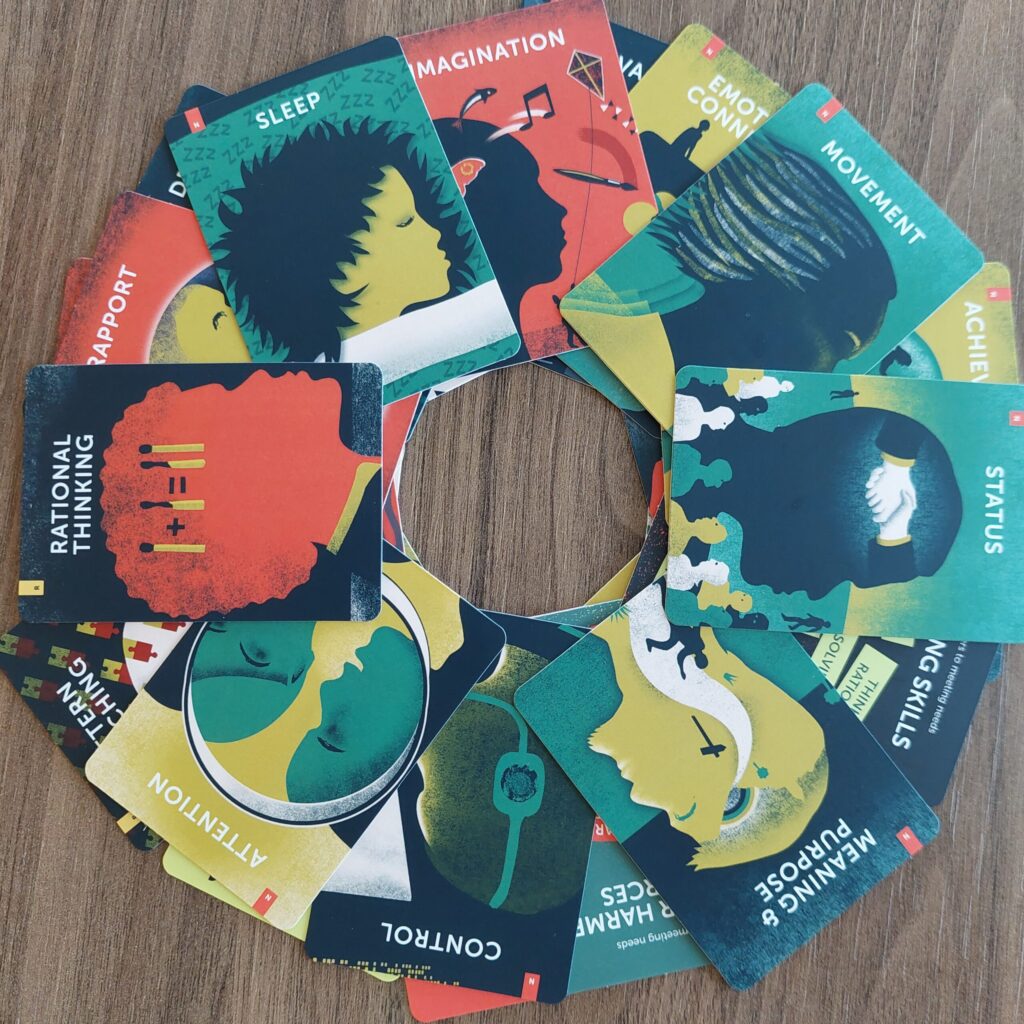
We’ve identified nine key emotional needs to meet to build resilience:
- Control
- Community
- Security
- Privacy (downtime)
- Attention
- Status (feeling valued)
- Emotional connection
- Achievement
- Meaning and purpose
When these needs are reasonably well met, we are at the wellbeing point on the mental health continuum — avoiding stress and mental ill health.
Resilience, to us, means meeting these needs in healthy ways so we can cope when one or more are blocked.
What can knock our resilience?
For example, imagine someone is made redundant tomorrow. That threatens:
- Security (worry about money)
- Control (lack of choice)
- Status (feeling undervalued)
…and possibly more.
But if other needs are met — say they’re in a loving relationship (emotional connection and attention), have supportive friends (community), are confident in their skills (achievement), make time for themselves (privacy), and volunteer (meaning and purpose) — they’re more likely to cope.
With most needs being met, they can stay calm and start problem-solving, like looking for a new job.
How you can use this approach to build your own resilience up
When I joined Suffolk Mind nearly a decade ago, I didn’t know anything about this approach. What I love about it is how straightforward it is. And I choose that word deliberately — it’s not simple, there’s a lot to learn — but everything you discover makes sense. It helps you understand yourself and the people around you.
Even more importantly, it helps you look after yourself and those around you.
If resilience means meeting your emotional needs proactively and with awareness, then the first step is knowing you have these needs. The second is taking action to ensure you, and the people you care about — at work or at home — can meet them too.
So yes, let’s build resilience. But let’s also be clear about what that means, and how we can do it.
Sign up for our newsletter from Suffolk Mind to get more tips and information here.
Our Head of Income Generation Wendy Sheppard recently attended a local Mind network event, where she had the opportunity to connect with colleagues and share best practices. One of the highlights of the day was an optional activity that truly resonated with Wendy. Here, she shares her experience and the impact it had.
This week, I had the opportunity to travel to Warwick for an annual gathering of leaders from the local Mind network, a space filled with passionate, purpose-driven individuals working to improve mental health in communities across the country.
Events like this always reaffirm why I do what I do at Suffolk Mind and why our work matters. More than anything, the experience helped me reconnect with key emotional needs that can often be overlooked in professional life such as Meaning & Purpose, Community, and Achievement.
One item on the agenda stood out: “Drumming Workshop Activity – optional.”
Optional? I thought – who would want to miss that?
As it turned out, a few colleagues chose to catch up on emails or finish off work during the session. But the majority of us decided to take part and by the evening, those who didn’t join us were wishing they had.
These moments, the rare and unexpected ones, are often where we find the most value. They’re the opportunities to say yes and to try something new, step outside routine, and connect with others in a different way.
Behind the conference suite, we discovered a vibrant room full of percussion instruments from around the world. Naturally, I went straight for one of the largest drums.
We each picked up an instrument, from traditional drums to an oddly ‘delightful’ double-headed cowbell. At first, the room filled with chaotic noise, but under the calm guidance of just two facilitators, we were split into groups and given rhythms to follow.
What began as a discordant jumble slowly evolved. With focus and teamwork, we created something harmonious.
Within 20 minutes, we were playing in sync, layering rhythms and enjoying the energy we had built together.
Looking around the room, I felt a genuine sense of Achievement, not just for hitting the right beats, but for stepping out of my comfort zone, engaging in something creative, and sharing in the collective success of the group.
This is what it means to meet emotional needs in action. Activities like this, however unconventional, enhance wellbeing by building confidence, strengthening connections, and creating space for joy.
So next time you attend a conference or corporate event, and there’s an “optional” activity on the schedule, I encourage you to say yes. It might just be the most rewarding part of your day.
Learn more about how to meet emotional needs at work and support mental wellbeing across your organisation.
New data from The Mental Health Toolkit, released to mark Mental Health Awareness Week, showed full-time workers saw an improvement in all of their Physical and Emotional Needs from April 1 2024 to March 31 this year.
More than 2,050 people across Suffolk have taken part in the Emotional Needs Audit in the past year, which sees them measure the way they meet their needs from 3 (well met) to -3 (not at all). A score of 1 is considered ‘met’.
People in full time work have reported significant improvements in the average scores across their emotional needs, including the need for Status (+0.90 points), Value (+0.99 points) and Meaning and Purpose (+1.12 points), and Community (+0.99 points), which had previously been the second least met need of all, after Sleep.
A similar picture was seen among part-time and self-employed workers – who meet their needs on average better than others
Relationship Manager Wendy Sheppard said: “it’s fantastic to see so many improvements across the Emotional Needs this year.
“Community especially is a need that many of us across the county have felt unable to meet in recent years, with everything from the coronavirus pandemic to cuts to local community organisations leading to people feeling more isolated.
“Continuing on this upward trend could have a big positive impact on the lives of thousands of workers across our county.”
Just five needs were actually considered met however – to Give Attention, Privacy, Close Relationships, Emotional Connection and Achievement.
The least met need continues to be Sleep, followed by Movement and Food and Drink
Wendy added: “While seeing such great improvements across the board is a cause for optimism, there is still concern in how few needs are actually being met.
“We know that meeting our Emotional Needs keeps us in a state of mental wellbeing – something not just crucial for the workplace, but our daily lives.
“It’s therefore so important that people look into the ways they can better meet their needs, and a great way to do that is through The Mental Health Toolkit.”
The Mental Health Toolkit is Suffolk Mind’s training arm, delivering in-person and online sessions for businesses and their employees across the country
Gabriella Dalling, Business Development Manager at AAI Freight Services, who has received The Mental Health Toolkit training, said: “I found the Mental Health Toolkit to be an excellent resource for learning and self-reflection.
“It can be used beyond work and applied to our personal lives, after all, burnout helps no one.
“This course is an eye-opener with excellent content and perfect delivery by the team.”
With Mental Health Awareness Week highlighting the importance of mental health education, there’s no better time to book an Introduction to the Mental Health Toolkit talk.
It is perfectly understandable that many working parents will worry about their children when they’re apart – especially when thinking of their teenager’s emotions when they’re not there to support them.
One of our innate Resources is Rapport, the ability to connect ot someone and communicate effectively. Rapport isn’t just about words, it’s tone of voice, your body language and matching someone’s energy.
for example, if you are communicating with high energy and passion with someone more closed off and quiet, you could be out of rapport. Slowing yourself down and mirroring them slightly can help you feel more connected and ‘on the same page’.
Finding out about the worries your child might be facing can be a difficult thing for parents to approach. And it’s no surprise your concerns about their wellbeing can be on your mind throughout the working day.
Every one of us – no matter our age – have the same set of innate resources that help us through our daily lives. One of those which can help in this case is Rapport.
It is an incredibly useful tool which helps us both connect and empathise with other people – but when speaking with teenagers, there’s a balancing act between involving yourself in their lives while respecting their boundaries. Their emotional needs for Privacy and Control need to be respected, after all.
Here, Suzanne Harris, Children’ Families and Young People’s Facilitator at our sister company Suffolk Mind, gives some useful tips to working parents on how to build Rapport with their children.
Showing that you care to build rapport
Building rapport is a way to break the ice, breaking down the barriers to conversation while showing you are there to support someone through whatever is troubling them.
The first step to doing that is creating a comfortable and accepting environment for your children to open up and share their feelings. That means it’s important for you to be in a calm mood, free of any stresses you might be feeling yourself from the working day.
A way to start the conversation could be saying you have noticed they look anxious or overwhelmed, that you care about them and ask if there’s anything you can do to help.
Talk to them when they are in the mood to talk – there’s no point talking to someone if they are not in that headspace.
Remember – it’s all about creating that comfortable space for conversation.
Don’t sweat the small stuff, focus on rapport
Just like in the workplace, at home there are also times when it’s best to pick your battles. In the case of building rapport with your children, that means not scrutinising the little things.
That could be anything from a messy bedroom or how they may have been neglecting a household chore. But remember – if they are worried about something, this may be a consequence of that anxiety.
Make sure to choose a calm and comfortable time to speak to them. You will likely find it difficult to create that suitable environment for opening up otherwise.
Reflective Listening
Reflective Listening is another of our innate resources – and often goes hand-in-hand with building Rapport.
It involves feeding back what the speaker has said to show we have listened and to check our understanding. You’ll likely use it every day at work without even realising.
Absorb what they are saying and say it back to them so they know you are on the same wavelength – it can really help to show you are listening and that you understand their point of view. You can also try summing up what they have said, to show you are following their train of thought.
If you are not paying attention to what they are saying, or look like you are distracted, they will feel you do not care about their concerns.
Suffolk Mind has produced a useful video on how to practise reflective listening to help you develop this important skill. It could even make a big difference to your work life if you’re a manager dealing with concerns from staff.
Sitting side-by-side takes the pressure off
When talking about your feelings, it can be difficult to do so when face-to-face with someone.
You’re speaking with your child, not conducting a job interview – so consider sitting side-by-side instead to build that more comfortable space.
When you open up and talk about your deepest feelings with someone looking directly at you at any age – like you are under scrutiny or being tested.
Sitting side-by-side gives you the space to open up without the tension that full eye contact can often bring.
Open questions, be curious
Most parents of teenagers will know what happens when you ask them “how was your day” – “alright, I guess” is often the answer.
If you are talking to your child about what they have been up to, it is best to ask open questions to avoid one word answers and to show you are genuinely interested.
Instead of “how was your day”, ask “what made you laugh at school today?” or “who did you talk with at lunchtime?”.
These more open questions will help open up a conversation and build rapport.
Respect their privacy and decision making
For teenagers, it is important you respect their privacy and their ability to make their own decisions.
They are finding their way in the world, all while living under your roof and rules, so can feel their emotional needs for Privacy and Control are affected.
With teenagers, avoid giving advice. Instead, think about giving suggestions.
Rather than “you should do this”, say “have you thought of doing this”.
Teenagers want to feel in control of their lives, and this can help them feel they are still in charge of their decision making.
It takes time to connect and build rapport
Building rapport is something that takes time. Don’t expect it to happen overnight.
There will be some days when your children are happy and open to talk, and other days they won’t be. But that’s ok.
There will be times when they will feel stressed – around exams or other struggles – but that’s perfectly natural. It’s ok for them to not be ok sometimes.
The important thing is they know you are there for them if they need you, that you are a long-term advocate, and that if they don’t want to talk today, you will be there for them tomorrow.
Learn more about our Emotional Needs & Resources and the ways they apply to work and home life.
Grief is something that touches all our lives at some point – it is the price we pay for love.
Many of us have experienced a bereavement, to have lost someone who means a lot to us and know how hard it is to experience.
It’s unique for each of us – there’s not a right or wrong way to grieve – and it can affect us in different ways.
Here, Fiona Hanlon, Head Trainer at The Mental Health Toolkit explores grief and loss and how we can support our colleagues through the difficult process.
A unique experience
There’s not a one size fits all way to grieve and a loss of a loved one can fuel many different emotions.
How we mourn may not be the same as other people.
On top of that, the circumstances of a loved one’s passing and the relationship we had with them vary greatly.
A loss could have been after a long illness, giving us some time to process the situation, or a sudden or unexpected passing creating shock and disbelief.
How we mourn the loss someone important in our lives is a deeply personal experience.
No ‘right’ way to grieve
There is no rulebook to grief, and no ‘right’ way in mourning.
It is worth remembering the word ‘should’ can be unhelpful when it comes to our emotions, and this is particularly true in bereavement.
You hear some people say there are stages to grief, but every loss is unique and how we react and process our emotions is very personal.
The loss of someone important in our lives will affect us both in the initial period following the death but also in how we meet our needs going forward.
Taking care of ourselves and meeting our needs
We all have physical and emotional needs we must meet to maintain our mental health – and it’s important that following a bereavement we continue meeting them.
Many of these needs are met without needing much thought, they are part of our daily routine – needs such as Food & Drink, Movement, Emotional Connection and Community.
But in a period of grief these routines may be disrupted – so it’s important to continue to meet them in other ways.
Everyone is different but this may include getting out of the office for a walk, making sure to eat well, get good quality sleep and meeting up with friends and family.
Meeting these needs doesn’t take away our grief, but it can help us look after our wellbeing while processing our emotions.
Our innate resources
We all have innate resources to help us meet our physical and emotional needs.
One resource that is useful in grief is Memory, not only in its ability to connect with memories that give us hope, but also in how it helps us experience the passage of time.
Memory allows us to remember good times we have had with lost loved one, reminiscing about moments of joy and laughter and things they have taught us.
Through this, we can keep loved ones in our hearts, so they are always part of us, remembering the good times we had with them.
Time is a healer
Grief can feel most painful in the immediate aftermath of finding out someone special has passed away.
It can be difficult in the moment to imagine feeling better following a bereavement, the pain is too raw, but as time goes on it does get easier as we process our emotions.
When someone returns to the workplace after experiencing the loss of a loved one, we might not know how to support our colleagues.
However, small gestures such as acknowledging their loss and being empathetic towards them, while also allowing them to have space when they need it, can make them feel more at ease with their return to work.
Help and support
There isn’t a right or wrong way to grieve and to remember a loved one – everyone finds their own way.
However, while mourning a loss it is important to remember to look after each other and to offer support in meeting physical and emotional needs.
If you would like to learn how to support your team with their mental health, you can book onto our Supporting Mental Health training course.
Are you getting some time to yourself every day to process your thoughts and let your mind wander? Privacy is one of our Emotional Needs that needs to be met to secure our wellbeing.
Finding time for you can be difficult – especially if you work in a busy office or a buzzing site. Not having time to meet our need for privacy can get in the way of processing our thoughts, thinking things through and deciding what’s important to us. If you’re finding your job demanding, you may need time away to turn things over in your mind and reflect on the task in hand.
If we are distracted by other concerns and find it difficult to listen to other people, a lack of privacy can also affect our relationships. And, without privacy during the day, we might find that our mind is still whirring when we are trying to sleep – this might be the first time in the day when we have had privacy to try and process things.
So, what simple things can you do to meet your need for Privacy?
- Allocate time for yourself in your day where you can have privacy. This might not always easy if you have a busy life, but taking just 10 minutes a day to be alone with your thoughts will help. At work, this could be going for a walk during your lunch break.
- If you work from home alongside other family members, agree a time with those around you (whether that be your partner, family, friends or housemates) when you can have some time alone so that they respect this time and give you the space.
- Create a space that enables you to feel calm, such as your bedroom at home, an outside space or a dedicated calm area. If you’re lucky, your work might already have a breakout space that you could use during the day.
- Step away from your desk or other workspace and do something relaxing such as doodling, taking a walk or just having five minutes of peace where you are away from the distractions of life (try and put your phone away!).
Take 10 for privacy outside
Getting outdoors and having access to nature is also a great way to meet our need for Privacy, as well as some of our other emotional needs. While a lack of nature can be a barrier to wellbeing, our research (from our Emotional Needs Survey on the Suffolk Mind website) shows that having access to nature supports people to meet their emotional needs for Movement, Privacy and Security.
Having access to the outdoors and nature is important for our mental and physical health. So, could you take 10 minutes away from your desk to sit calmly amongst nature, mull over your day, perhaps with a cup of tea, and do something positive for your mental wellbeing?
The Mental Health Toolkit’s approach to training suggests that we all have 12 Emotional Needs that we need to meet in balance so that we can stay well. One of these needs is Community.
Essentially, meeting our need for Community means being a part of a group.
If we don’t feel like we are part of a group, we are at risk of social isolation which, in turn, could cause us to move into the stress end of the Mental Health Continuum.
For some people, the workplace is their community and they naturally meet this need at work. The workplace can also have community groups within the organisation, such as a green group (keeping the workplace eco-friendly) or an events committee.
Some also find groups outside of work which enables them to have that essential work-life balance.
Getting your Community need met
If you’re looking to join a group at work, get in touch with your HR department. Your workplace may well have a variety of committees and groups available that you can be a part of.
Outside of work, you might want to think about an activity you have previously enjoyed and search for it within your local area. If there isn’t a group there already, make one!
Joining a group can be daunting, but reflecting on memories of how you enjoyed an activity can help you gain the confidence to do it.
Groups you can join with Suffolk Mind
If you’re keen to do good while meeting your need for Community, Suffolk Mind have a number of groups you can join:
GreenCare: If you’ve got a knack for gardening, Suffolk Mind’s GreenCare allotment projects might be the group for you. You can be a participant, or you could offer to volunteer your expertise.
Open Space: Open Space is a number of drop-in health and wellbeing groups across Suffolk, which are run by trained staff and supported with volunteers. There’s no need to sign-up, simply drop in to your nearest Open Space when you want to. Suffolk Mind is always looking for volunteers at the Open Space groups, so do get in touch with the team if you’d like to get involved.
Fundraising: If your workplace is looking for a charity to support, Suffolk Mind is always keen to hear from you. You can fundraise with friends or colleagues, or even speak to the Fundraising Team to see how best you can support them.
According to Suffolk Mind research, less than a fifth of full-time workers in are getting enough sleep.
Just 16.9% of 7,317 full-time workers surveyed said they are getting a healthy amount of sleep, which is one of every person’s 12 physical and emotional needs.
The figure was revealed as part of Suffolk Mind’s Emotional Needs Audit, an ongoing survey into the county’s mental health
Common barriers workers reported to sleep included their work situation (42.18% of respondents) and their workload (28.19%). The most prevalent was their overall physical and mental health at 54.1%.
Ezra Hewing, Head of Mental Health Education at Suffolk Mind, said the findings showcase the need for better mental health support in the workplace.
Ezra said: “All of us know the feeling of coming into work after a bad night’s sleep.
“Sleep is incredibly important to both our physical and mental health – so coming into the office when your mind and body haven’t had ample time to rest can be detrimental both to an employee’s wellbeing and a business’ overall output.
“There are so many factors behind the things that get in the way of a healthy sleep, but a great place to start – as highlighted in the barriers respondents have reported – is in the office.”
The Mental Health Toolkit offers a suite of training aimed at supporting workplace wellbeing
The Supporting Mental Health course helps build a healthy relationship between team members, directly influencing productivity, motivation and engagement while equipping people with the tools to better understand and manage their mental health.
Ezra added: “It is important change begins at the top to help build a more supportive management structure that’s in touch with the needs of its workforce.
“While workplace training isn’t going to help improve sleep overnight, it is a great first step in relieving the stresses staff may feel while helping them better understand their mental health.”
The relationship between a healthy work-life balance and the way we meet our emotional needs has been revealed thanks to research by The Mental Health Toolkit and Suffolk Mind.
The new findings, released as part of Workplace Wellbeing Week, come through our ongoing Emotional Needs Audit, run in partnership with Suffolk Mind.
So far receiving more than 25,000 responses, the audit asks people to rate how well they are meeting their needs from -3 to +3 – with a score of +1 considered “met”.
What does the research show?
Respondents to the Emotional Needs Audit are asked to report what their barriers are to meeting each of their 12 emotional needs.
For employed respondents, work-life balance or workload made up more than a quarter of the barriers reported to every need.
This included 52% who reported it as a barrier to meeting their need to give attention, while 56% said It was a barrier to feeling valued.
A further 40% of people said it got in the way of feeling secure in their lives, with another 39% saying it was a barrier to sleep.
Wendy Sheppard, Corporate Relationships Manager at Suffolk Mind and The Mental Health Toolkit, said: “All of us know how a stressful day at work can impact our home life – particularly when those difficult days begin to become a trend.
“This research has shown us just how much those days can impact our mental health, proving a barrier to every one of our emotional needs.
“As employers it is vital we recognise the warning signs of a poor work-life balance in our teams and offer support to those who need it.
“We cover these topics extensively in our online training sessions, designed to help you build long-term cultures of empowering support and wellbeing.”
Wendy added the report’s findings show the importance of our Emotional Needs Audit and the potential it has to change the ways we look at mental health.
She said: “These findings demonstrate the value of our Emotional Needs Audit and the important insights it gives us as an organisation.
“I would implore anyone yet to take part, or who hasn’t checked in recently, to spare five minutes at their desk and complete it. These stats make a huge difference in how we can better approach mental health.”
Find out more about our workshops and training.
Supporting Men’s Mental Health in the Workplace: A Call to Action for Businesses
Recent research from Suffolk Mind highlights a significant decline in how well men’s emotional and physical needs are being met. Unmet needs could lead to stress and impact men’s mental health. The findings, drawn from Suffolk Mind’s Emotional Needs Audit of over 25,000 responses, show that men’s emotional needs were 13% worse met in 2023/24 compared to 2022/23. This decline poses a substantial challenge for businesses aiming to foster a healthy, productive workforce.
Key findings:
Community: Needs were 21% worse met than the previous year.
Meaning and Purpose: Experienced a 20% decline.
Security: Fell by 18%.
Ezra Hewing, Head of Education at The Mental Health Toolkit (a workplace wellbeing training arm of Suffolk Mind), emphasised the importance of addressing unmet needs: “Men’s mental health is a big issue, and being aware that small changes can make a big difference is key.
“If someone is not meeting their physical and emotional needs for an extended period of time, this can lead to stress – which could progress to mental ill health.”
As businesse leaders, it is essential to prioritise men’s mental health. By ensuring they are aware of available support you are encouraging them to put their wellbeing first.
Workplace impact:
Work situation: 39% of men reported their work situation as a barrier to meeting their needs. This is up from 33% the previous year.
Relationships: 35% of men cited their relationships as a barrier, an increase from 29% in 2023.
Ezra further explained, “Some approaches to addressing mental health may not appeal to all men – they may prefer practical solutions rather than being told to open up about their feelings.
“Men express their emotions in different ways, and there is a risk that we end up alienating them, particularly if they value independence and self-reliance.
“There needs to be recognition that some men feel comfortable about sharing how they feel and asking for help, while there are those who don’t.
“The most important thing is to let men know there is support out there for them if they need it.”

Business action steps:
Implement practical solutions: Offer actionable, straightforward strategies that men can incorporate into their daily routines.
Foster a supportive environment: Create a workplace culture where all employees feel comfortable seeking help. Train line managers so they are equipped with the knowledge and tools to support their staff.
Diverse support options: Cater to the needs of your business and team. Provide various resources, from our suite of workshops and courses to 1-2-1 coaching sessions or Suffolk Mind’s counselling services.
By adopting these practices, businesses can enhance employee wellbeing. This in turn leads to improved job satisfaction, increased productivity, and a healthier workplace culture.
For more information on Suffolk Mind’s approach to men’s mental health, visit Suffolk Mind – Men and Emotions. www.suffolkmind.org.uk/advice-information/men-and-emotions
To explore the resources and courses available through The Mental Health Toolkit: https://www.thementalhealthtoolkit.co.uk/the-toolkit/explore/
Self-employed workers are more likely to meet their emotional and physical needs than those who work full or part-time hours, according to new research by The Mental Health Toolkit and Suffolk Mind.
Our ongoing Emotional Needs Audit, run in partnership with Suffolk Mind, asks respondents to rate how well they are meeting their needs from -3 to +3. It has so far received more than 25,000 responses.
Our CEO Jon Neal said: “We all have emotional and physical needs to meet to stay healthy and well, and our research reveals work can play a significant role in that.
“Our survey shows people who are working full or part-time are less likely to be meeting their physical and emotional needs, particularly Sleep and Movement.
“People who are self-employed report they are meeting more of their needs overall on average, however they are less likely to be meeting their needs for Security and Community.
“This may be as a result of being responsible for generating their own work and many working as sole traders.”
What does the research show?
The research revealed unemployed people were meeting fewer needs than those who are employed, giving an overall average response of 0.26. Their least well met needs being Sleep, Security and Community.
The research, exclusive to Suffolk, found full-time workers give an overall response of 0.73, with part-time workers scoring 0.79. Self-employed respondents rated the highest overall at 0.88. This makes them more likely to be at the ‘wellbeing’ end of the mental health continuum.
It comes as we have had a busy week taking The Mental Health Toolkit training to businesses across Suffolk for Mental Health Awareness Week.
Jon added: “It’s not just about employers caring for their employees’ wellbeing – it’s proven to be good for the bottom line of every organisation too.
“It might sound a challenge to maintain a good environment for mental health, but help is available to equip both you and your staff with the tools we all need to identify the signs of mental ill health and how to support them.
“The Mental Health Toolkit gives businesses training to help staff meet their physical and emotional needs, supporting them to find a healthy work/life balance.”
Find out more
The Mental Health Toolkit is a programme of training and workshops for employers that seek to foster a supportive culture empowering support and wellbeing.