
Resilience: how do we build it?

Let’s build resilience. Anyone disagree? No? Didn’t think so… but what does that actually mean?
It makes sense to do it, of course. We all want fewer people off work with mental ill health. We’re all worried about our kids — particularly teenagers. We’d all like to avoid stress. And most of us know someone in our family or friendship groups who has been mentally unwell.
So, let’s build resilience and everything will be okay, right? Kind of.
At Suffolk Mind, we like to unpack abstract language — which is an abstract expression itself: “unpack” is a metaphor. We aim to be as clear and concrete (another metaphor) as possible.
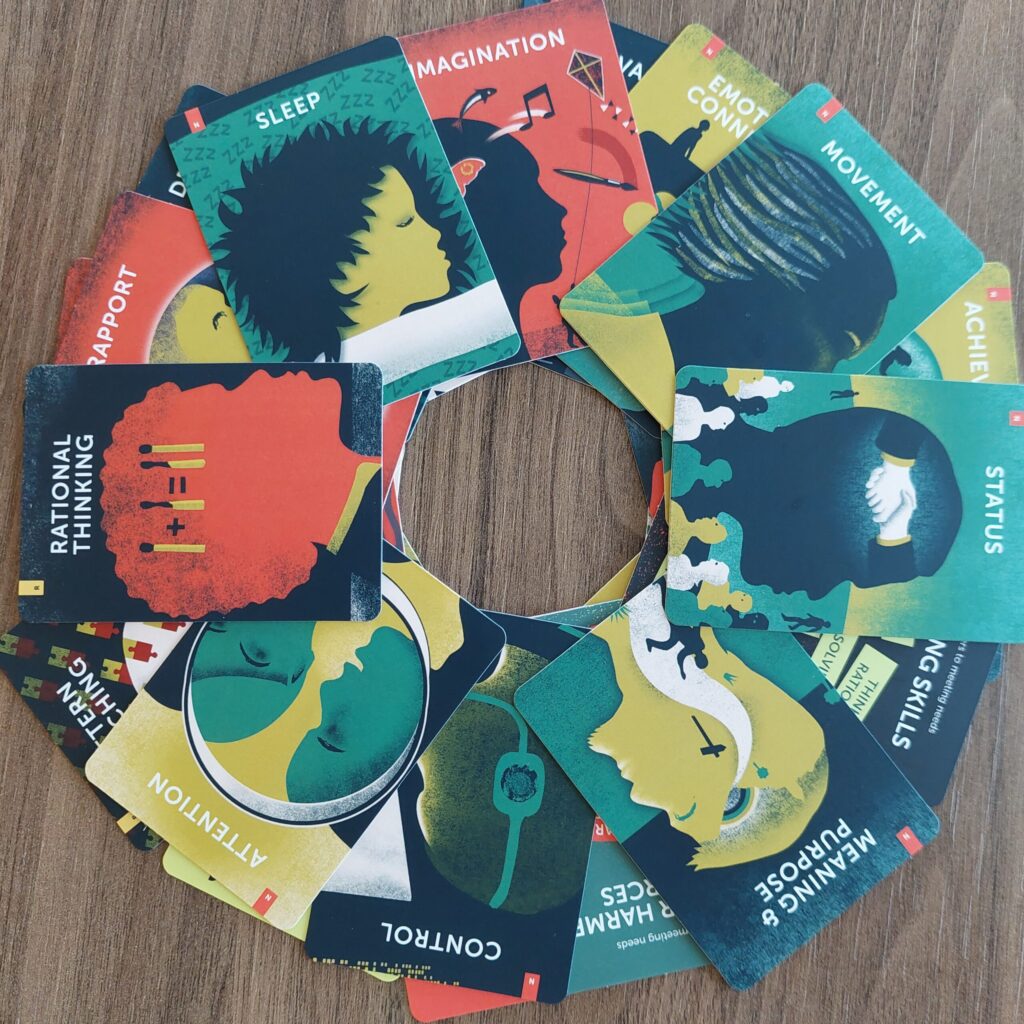
Resilience, at Suffolk Mind, means meeting our emotional needs as well as possible so we can cope when one of them is temporarily unmet.
We’ve identified nine key emotional needs to meet to build resilience:
- Control
- Community
- Security
- Privacy (downtime)
- Attention
- Status (feeling valued)
- Emotional connection
- Achievement
- Meaning and purpose
When these needs are reasonably well met, we are at the wellbeing point on the mental health continuum — avoiding stress and mental ill health.
Resilience, to us, means meeting these needs in healthy ways so we can cope when one or more are blocked.
What can knock our resilience?
For example, imagine someone is made redundant tomorrow. That threatens:
- Security (worry about money)
- Control (lack of choice)
- Status (feeling undervalued)
…and possibly more.
But if other needs are met — say they’re in a loving relationship (emotional connection and attention), have supportive friends (community), are confident in their skills (achievement), make time for themselves (privacy), and volunteer (meaning and purpose) — they’re more likely to cope.
With most needs being met, they can stay calm and start problem-solving, like looking for a new job.
How you can use this approach to build your own resilience up
When I joined Suffolk Mind nearly a decade ago, I didn’t know anything about this approach. What I love about it is how straightforward it is. And I choose that word deliberately — it’s not simple, there’s a lot to learn — but everything you discover makes sense. It helps you understand yourself and the people around you.
Even more importantly, it helps you look after yourself and those around you.
If resilience means meeting your emotional needs proactively and with awareness, then the first step is knowing you have these needs. The second is taking action to ensure you, and the people you care about — at work or at home — can meet them too.
So yes, let’s build resilience. But let’s also be clear about what that means, and how we can do it.
Sign up for our newsletter from Suffolk Mind to get more tips and information here.
Our key workshops and courses




Speak to us today